
Is Gran Canaria worth visiting in winter? Yes. If you want mild weather, time outdoors and the option to mix beaches, villages, hiking and city life, Gran Canaria is one of the most versatile winter-sun destinations in Europe. The main decision is where to stay: the south and southwest are usually drier and sunnier, while the north, mid-altitude areas and mountains can be cooler and cloudier.
Do not expect guaranteed summer weather every day. What makes the island work so well in winter is its variety of microclimates and the freedom to change plans according to conditions.
Gran Canaria winter weather
December, January and February are generally mild on the coast, with average temperatures around 18–19°C and average daytime highs around 21–22°C. Altitude makes a real difference: you can leave Maspalomas in a T-shirt and need a jacket a few hours later around Tejeda or Roque Nublo.
For an objective reference, AEMET climate normals for Gran Canaria Airport (1981–2010) are:
| Month | Average | Average high | Average low | Rainfall |
|---|---|---|---|---|
| December | 19.2°C | 22.2°C | 16.2°C | 31 mm |
| January | 17.9°C | 20.8°C | 15.0°C | 25 mm |
| February | 18.2°C | 21.2°C | 15.0°C | 24 mm |
These are climate averages, not a forecast for your exact week, and the station is on the east coast. The official Gran Canaria tourism website also explains how strongly the island’s relief affects local weather.
Where is the warmest part of Gran Canaria in winter?
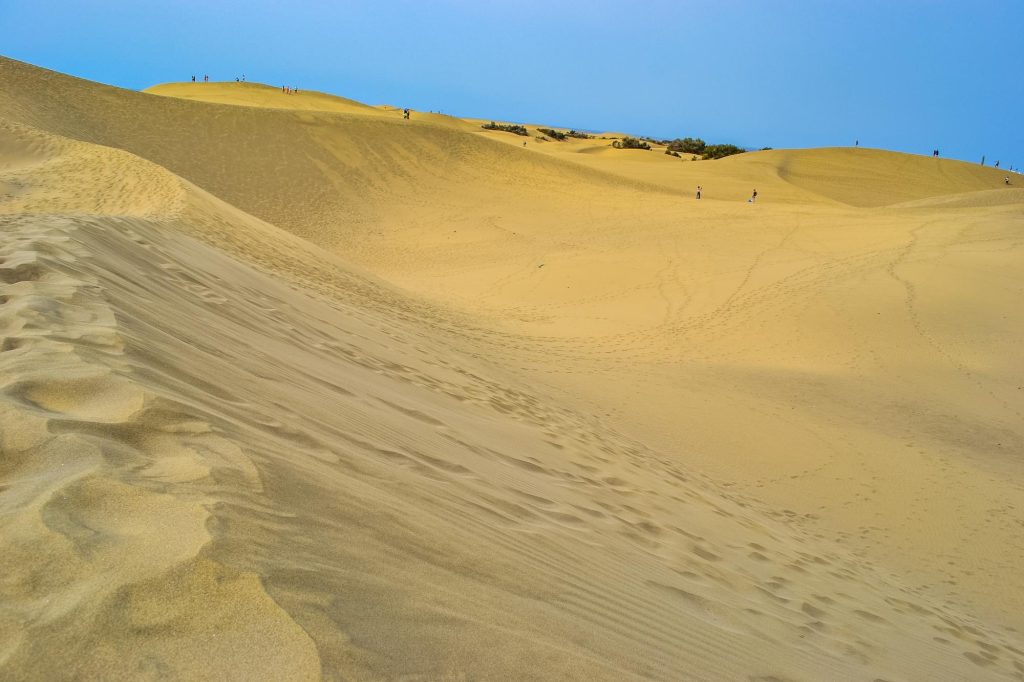
If your aim is to maximise the chance of sunshine, look at the south and southwest: Maspalomas, Meloneras, Arguineguín, Puerto Rico, Amadores, Taurito and Puerto de Mogán. No area can guarantee perfect weather, but this side of the island usually has the advantage.
The north and mid-altitude areas are greener and more humid, while the mountains are considerably cooler. Check forecasts by area rather than relying on one temperature for the whole island.
Where to stay in Gran Canaria in winter
For a beach-focused winter break, the south and southwest are the easiest choices. For food, culture and local city life, Las Palmas de Gran Canaria offers more variety.
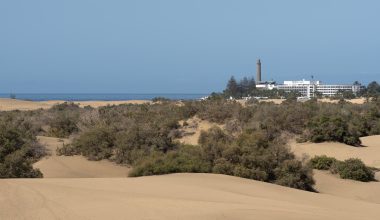
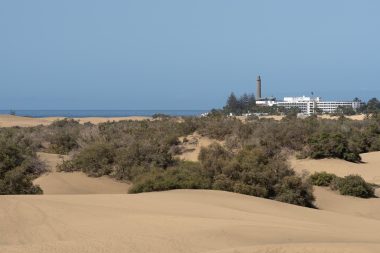
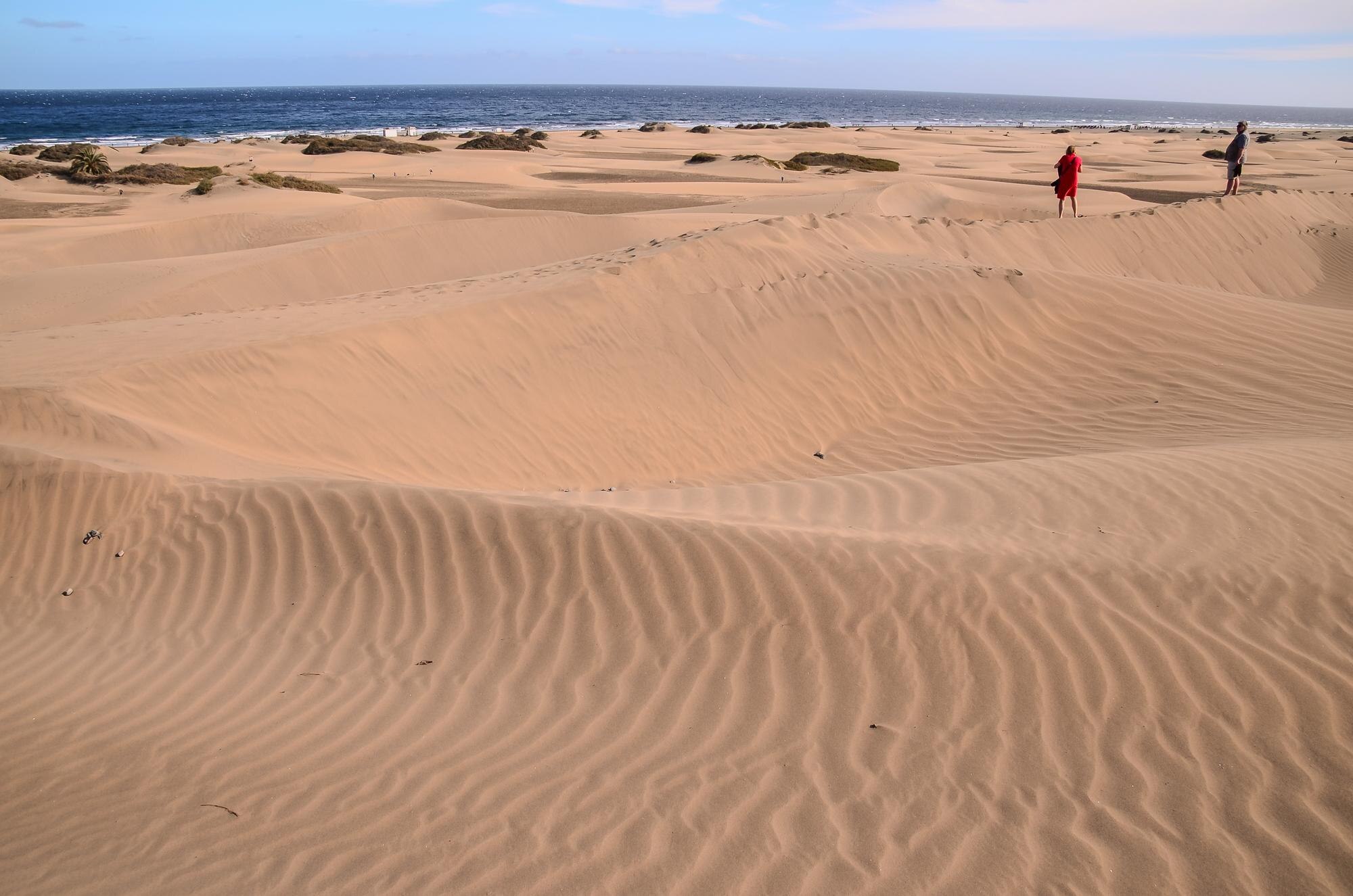
- Maspalomas and Meloneras: good all-round bases for beaches, promenades, restaurants and excursions. For the protected landscape itself, see our Maspalomas Dunes guide.
- Puerto Rico and Amadores: practical if sunshine, sheltered beaches and easy services matter most.
- Puerto de Mogán: a smaller, calmer base with a harbour, beach and relaxed evenings. See our detailed Puerto de Mogán guide.
- Las Palmas de Gran Canaria: best if you want Las Canteras beach alongside historic neighbourhoods, restaurants and everyday city life.
Can you go to the beach in winter?
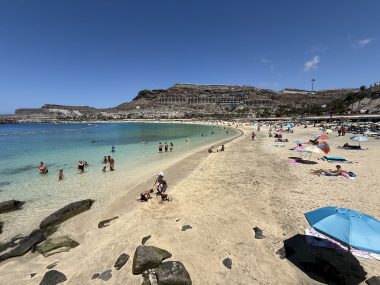
Yes. There are plenty of winter days suitable for the beach, especially in the south, although wind and sea conditions matter as much as air temperature. Maspalomas, Amadores, Puerto Rico, Puerto de Mogán and Las Canteras are all practical choices.
The Atlantic can feel cool, so a sunny day does not automatically mean everyone will enjoy swimming. Always check waves, wind and beach flags before entering the water.
Best things to do in Gran Canaria in winter
Winter is one of the best seasons for seeing more than the resort areas. Milder temperatures make it easier to combine the coast with villages, viewpoints and hiking without the stronger summer heat.
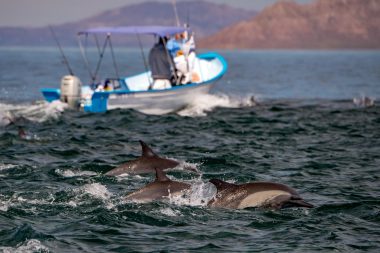
Boat trips, whale and dolphin watching, water activities and guided tours can all fit well if conditions are suitable. You can compare Gran Canaria experiences on Gran Canaria Plan and choose only the activities that genuinely fit your route.
Hiking and the mountains
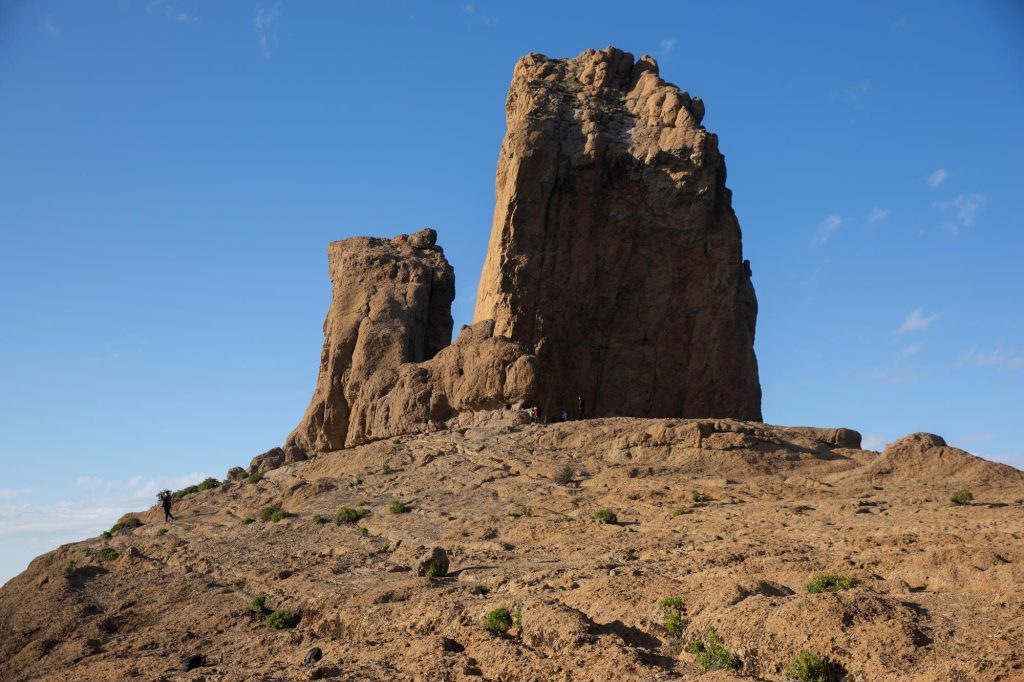
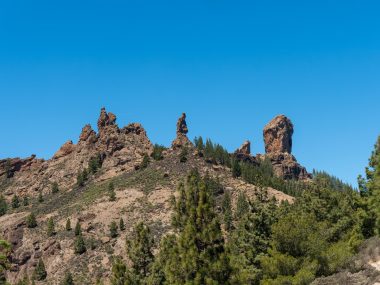
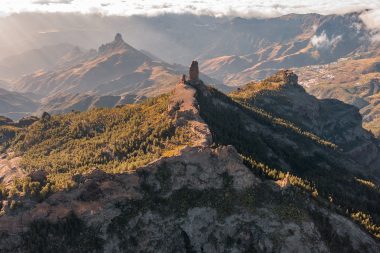
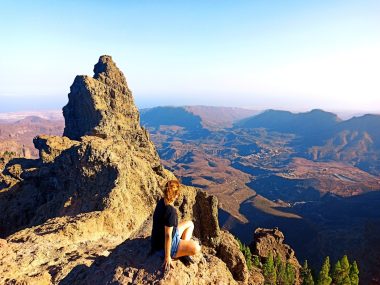
Tejeda and Roque Nublo show the island’s mountainous side. Access to Roque Nublo can be regulated, so check the latest information from the Cabildo de Gran Canaria before travelling.
For a very different geological stop, Barranco de las Vacas works well as part of a southeast route, so there is no need to reproduce the detailed access and parking information here.
December, January or February: which month is best?
- December: popular for Christmas and New Year, with a 19.2°C average at the airport station. Accommodation is worth booking earlier around the festive period.
- January: excellent for hiking and day trips, with an airport climate average of 17.9°C.
- February: very similar to January, averaging 18.2°C, and well suited to a mix of beaches, walking and food.
The temperature differences are small. Your dates, prices, availability and preferred style of trip usually matter more than a fraction of a degree.
What to pack for Gran Canaria in winter
Layers are the safest approach. For the coast, light clothes, long trousers for the evening, a sweatshirt or light jacket, swimwear, sunglasses and sunscreen are usually enough. If you are heading into the mountains, add footwear with good grip and a warmer or windproof layer.
A common mistake is packing only for the weather in the south. Gran Canaria can give you beach conditions and genuinely cool mountain weather on the same day.
Practical winter travel tips
- Check forecasts by location. Maspalomas, Mogán, Las Palmas de Gran Canaria and Tejeda can have very different conditions.
- Keep some days flexible. If the mountains are cloudy, switch to the coast; if the sea is rough, swap a boat trip for a village or inland route.
- Consider hiring a car. It is not essential for a one-area resort holiday, but it makes the north, mountains, west and south much easier to combine.
- Allow extra time on mountain roads. Distances may look short, but bends and elevation changes slow journeys down.
- Book ahead for Christmas and New Year. These are popular winter travel dates.
Frequently asked questions
Is Gran Canaria or Tenerife better in winter?
There is no universal winner. Both are strong winter-sun islands. Gran Canaria is particularly appealing if you want southern beaches, dramatic ravines, mountain villages and a capital with a major urban beach within relatively compact distances.
How many days do you need in Gran Canaria in winter?
Four or five days is enough to focus on one area and add several day trips. A week gives you a better balance between the south, Las Palmas de Gran Canaria, the mountains and Mogán without rushing.