
Gran Canaria combines city beaches, sweeping sands beside dunes, sheltered bays, family-friendly spots and far more remote stretches of coast. The best choice depends less on finding one perfect beach and more on knowing what you want from the day: easy facilities, scenery, quieter water, snorkelling, a long walk or a wilder setting.
This guide to the best beaches in Gran Canaria compares ten options across the south, the capital, the south-west, the west and the north. Sea conditions can change quickly, so always check flags, swell and local safety information before swimming.
10 best beaches in Gran Canaria: quick comparison
| Beach | Area | Best for | Type | Atmosphere |
|---|---|---|---|---|
| Maspalomas | South | Scenery and walking | Golden sand | Iconic and spacious |
| Las Canteras | Las Palmas | City beach, swimming and snorkelling | Golden sand | Urban and local |
| Amadores | South-west | Families and convenience | Pale sand | Relaxed and well equipped |
| Anfi del Mar | South-west | Easy swimming | Pale sand | Resort |
| Playa de Mogán | South-west | Families and strolling | Sand | Compact and lively |
| Playa del Inglés | South | Facilities and a long beach | Golden sand | Busy and active |
| Güigüi | West | Nature and isolation | Dark sand | Wild and remote |
| San Agustín | South | Relaxing and families | Dark sand | Quieter |
| El Confital | Las Palmas | Scenery and walking | Rock and sand | Natural and volcanic |
| Sardina del Norte | North | Local atmosphere and marine life | Sand and harbour edge | Local and maritime |
1. Maspalomas Beach: dunes, lighthouse and a big-sky landscape
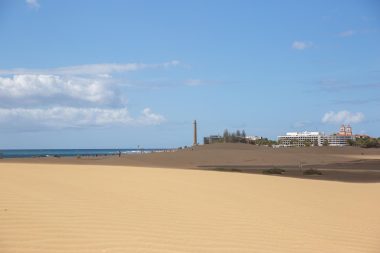
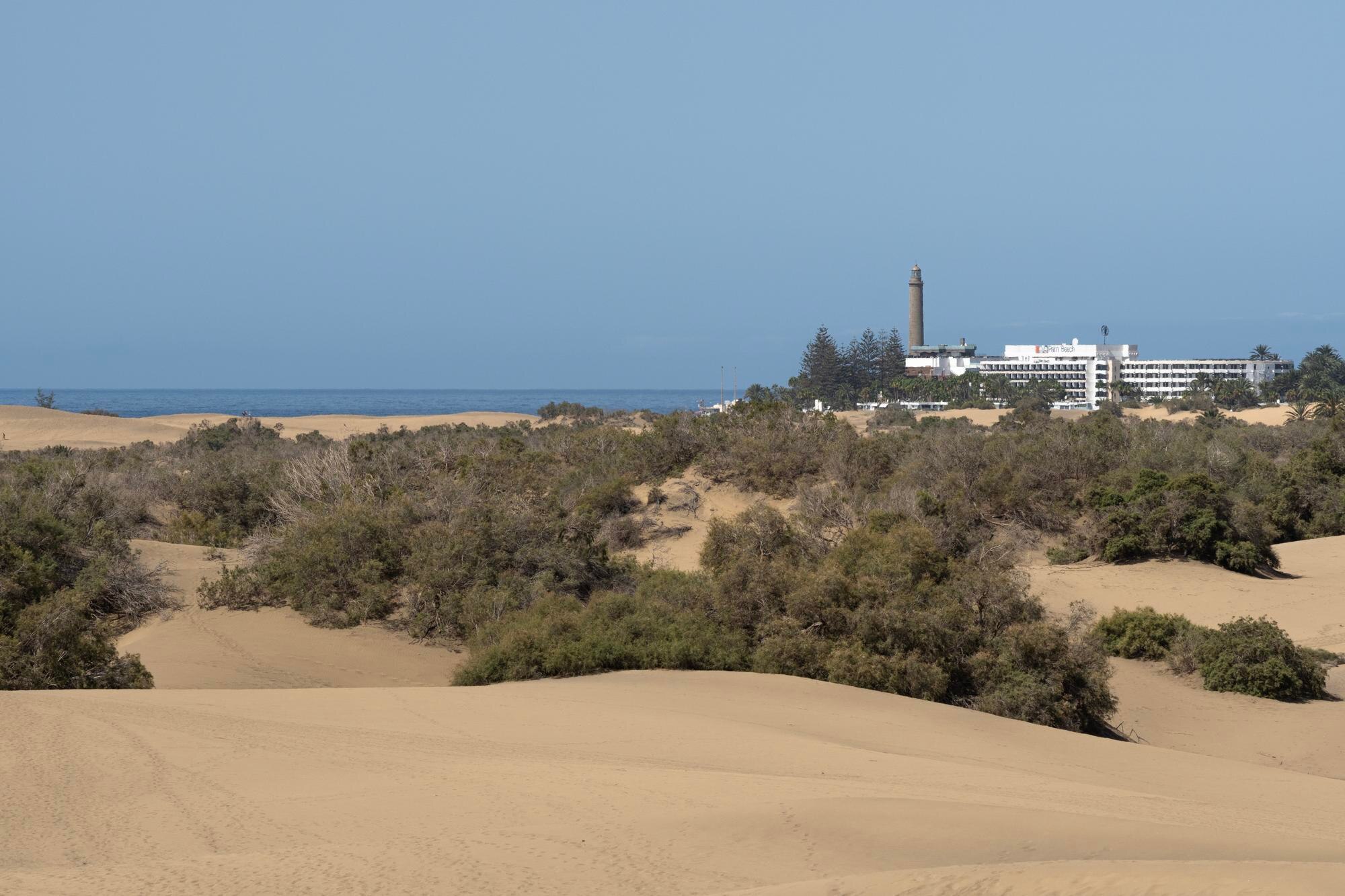
Maspalomas tops the list because the beach and landscape feel inseparable. The broad sweep of sand runs beside the protected Maspalomas Dunes and makes it easy to combine swimming with a walk towards the lighthouse or along the coast.
It is a strong choice if you want space and scenery rather than a compact bay. The trade-off is distance: you may walk much farther than at an urban beach, and sun exposure can be intense. The dunes are protected, so use the authorised routes and check our dedicated Maspalomas Dunes guide for practical access and conservation rules.
2. Las Canteras: Gran Canaria’s standout urban beach
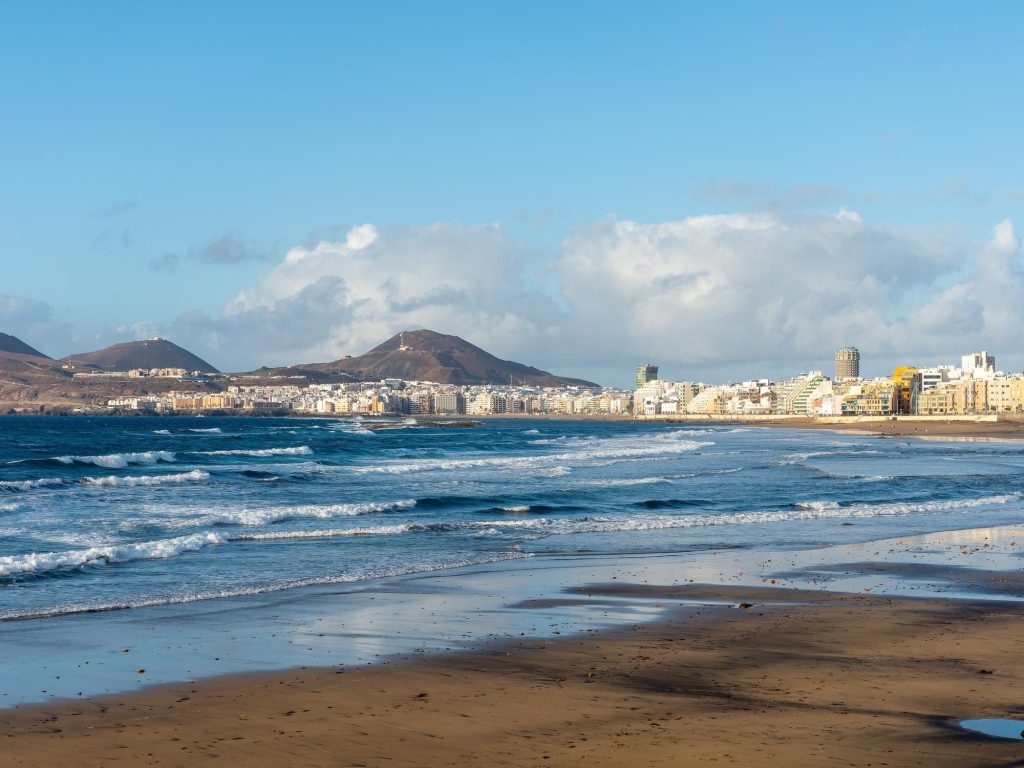
Las Canteras works in a completely different way from Maspalomas because it sits inside the city. You have a long promenade, restaurants, everyday neighbourhood life and several distinct sections of beach within walking distance.
The natural reef known as La Barra shelters part of the bay, and when sea conditions and visibility are suitable, some areas can be good for watching marine life with a mask and snorkel. At La Cícer the character changes again, with a stronger surfing scene. Our guide to Las Palmas in one day helps you combine the beach with Vegueta and Triana.
3. Amadores Beach: easy for families and low-effort beach days
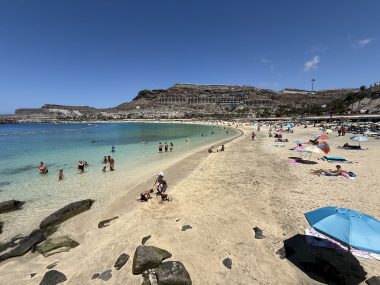
Amadores is one of the easiest south-west beaches if you value straightforward access, nearby services and a day that does not need much planning. Its sheltered shape often means calmer conditions than on more exposed beaches, although no beach should ever be treated as permanently calm.
It is especially practical for families and also suits couples who want to spend several hours by the water with cafés, restaurants and a promenade close by. It feels more developed than a wild beach, but that is precisely why it works so well for a simple beach day.
4. Anfi del Mar: pale sand and a very different look
Anfi del Mar stands out for its pale sand and bright water on clear days. It is heavily developed and closely tied to resort areas, so the experience is very different from Güigüi, El Confital or Sardina.
Choose it if you want an easy, comfortable day with services close at hand. If solitude and untouched scenery matter more, it will not be the obvious choice; if convenience and a compact beach are priorities, it can be one of the easiest options in the south-west.
5. Playa de Mogán: beach, harbour and a stroll in one day
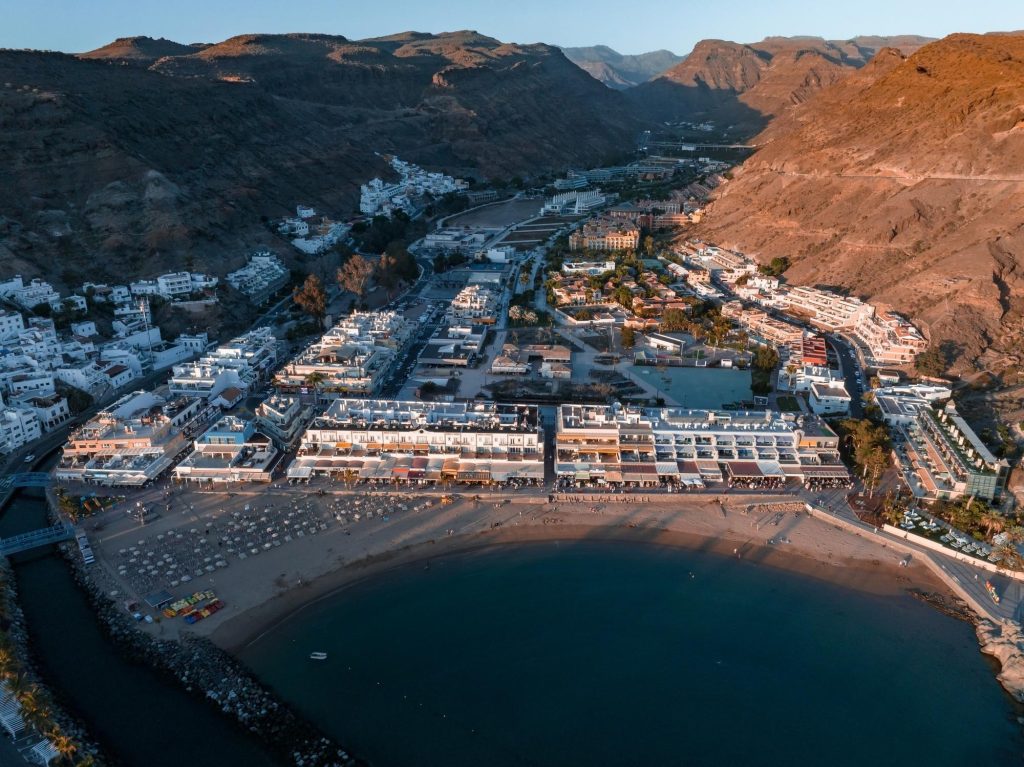
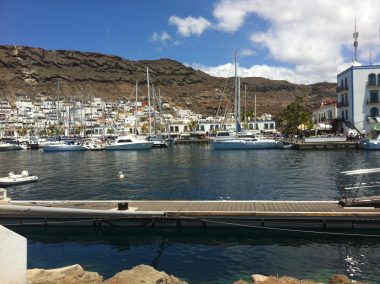
Playa de Mogán is not one of the island’s largest beaches, but its compact size is part of the appeal. You can spend a few hours on the sand, wander around the marina and pedestrian streets, then stop for lunch without changing area.
It suits families and travellers who want beach time mixed with a bit of exploring. Our Puerto de Mogán guide covers the harbour and town in more detail.
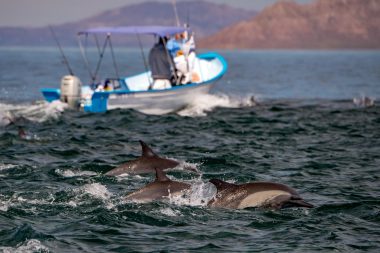
If you want to add time on the water, a day in the south-west can also work with a dolphin and whale watching trip linked with Mogán. These are wild animals, so sightings can never be guaranteed; check the current conditions and availability before booking.
6. Playa del Inglés: long, lively and full of services
Playa del Inglés suits travellers who want plenty of space, a broad choice of services and a livelier holiday atmosphere. Its length makes it possible to find sections with different rhythms and to connect naturally with the Maspalomas side of the coast.
Compared with the more landscape-led appeal of Maspalomas, this beach is more about convenience: accommodation, restaurants and entertainment are all close. It is a practical base if your holiday revolves around the beach and you would rather not rely on a hire car every day.
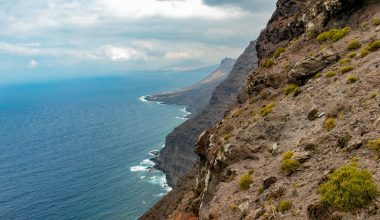
7. Güigüi: a wild beach that takes real effort to reach
Güigüi — also written Güi Güi or Guguy — is the opposite of a resort beach. It lies in a protected natural setting on Gran Canaria’s west coast and there is no simple road access down to the sand.
Official visitor information describes access by foot or by boat. The overland route involves significant ascent and descent and is physically demanding, so it should not be treated as a casual beach walk. If you do not have enough time, water, experience or suitable conditions, choose another beach. Its appeal comes from remoteness and landscape, not convenience.
8. San Agustín: a calmer southern alternative
San Agustín is a useful option if you want to stay in the south without the same level of activity as Playa del Inglés. It has nearby accommodation and services, but the atmosphere is generally more restrained.
That can work especially well for families and couples looking for an easier-going beach day. As on any Atlantic beach, check the conditions on the day and do not assume the sea will behave the same way every time you visit.
9. El Confital: volcanic scenery beside the capital
El Confital adds volcanic coastline, open Atlantic views and a much more natural feel than Las Canteras, despite being close to Las Palmas. The main reason to come is the landscape, walking and sense of space rather than the convenience of a city beach.
Important: at the time of preparing this guide, the Las Palmas municipal information page states that bathing is prohibited at El Confital because of pollution incidents. We therefore include it as a place for scenery and walking, not as a recommendation for swimming. Check the official status before entering the water or planning any water activity. For a more active look at the island, our guide to outdoor activities in Gran Canaria covers coastal and mountain ideas.
10. Sardina del Norte: local atmosphere and a different side of the island
Sardina del Norte earns its place because it represents a very different coastline from the southern resorts. The small beach and harbour area feel more local, with a maritime character and seabed that is well known among divers.
When sea conditions and visibility are suitable, it can also be interesting for snorkelling, but that should never be assumed on every visit. It is a good choice if you want to spend time in the north and prefer a smaller local beach to a large resort-backed stretch of sand.
Which Gran Canaria beach is best for your holiday?
For families, Amadores, Playa de Mogán, Anfi del Mar and San Agustín are among the easiest options because of access and services. For a city beach, Las Canteras is the standout. For scenery, Maspalomas has the dunes. For a remote nature experience, Güigüi demands far more preparation. And for a more local northern feel, Sardina offers a clear contrast.
If you plan to visit several beaches, our guide to getting around Gran Canaria helps you decide when a hire car, bus or taxi makes sense. For weather and seasonality, see the best time to visit Gran Canaria.
If you want to mix beach days with organised sightseeing, our guide to the best excursions in Gran Canaria covers sea, mountain and city options.
Frequently asked questions about Gran Canaria beaches
What is the best beach in Gran Canaria?
It depends on the trip. Maspalomas stands out for scenery and space, Las Canteras for beach plus city life, Amadores for family convenience and Güigüi for remoteness and nature.
Which Gran Canaria beaches are best for families?
Amadores, Playa de Mogán, Anfi del Mar and San Agustín are usually practical because of access and nearby services. Always check beach flags, swell and lifeguard advice before swimming.
Are the best beaches in the north or south of Gran Canaria?
The south and south-west have many of the island’s most convenient sandy beaches, while the north and west offer smaller beaches, volcanic scenery and a more local or remote atmosphere. Combining both gives a much broader picture of the island.
Can you swim in Gran Canaria all year round?
People use the coast throughout the year, especially in the south, but wind, swell, cloud and water temperature vary by area and day. Always base the decision to swim on current local conditions rather than the month alone.