
Barranco de las Vacas is worth visiting if you want to see one of Gran Canaria’s most unusual geological landscapes, but the access and parking need a little planning. The most photographed section is beside the GC-550 road between Agüimes and Temisas, around kilometre 14. The walk itself is short, parking is extremely limited, and you should never enter the ravine during heavy rain or flood warnings.
The famous narrow walls are technically in Barranco del Peladero. “Barranco de las Vacas” has become the popular name for the whole spot, which is why maps and directions can sometimes appear inconsistent.
Where is Barranco de las Vacas and how do you get there?
The usual access is from the GC-550 in the municipality of Agüimes. The road crosses the ravine on a bridge, and the path to the sculpted tuff walls begins nearby, descending towards the dry channel. The official IGME geological-interest record places the site in this area and also notes the very limited parking.
From Las Palmas de Gran Canaria or the main southern resorts such as Maspalomas, Playa del Inglés and Meloneras, the usual route is via the GC-1 towards Agüimes before continuing on local roads. The final stretch is winding and narrow in places, so drive slowly and do not stop suddenly when you spot the entrance.
Where can you park?
There is no large official car park at the entrance. IGME notes that only one or two vehicles can fit close to the access point, with another small roadside area farther downhill towards Agüimes where it may be possible to park carefully and walk back.
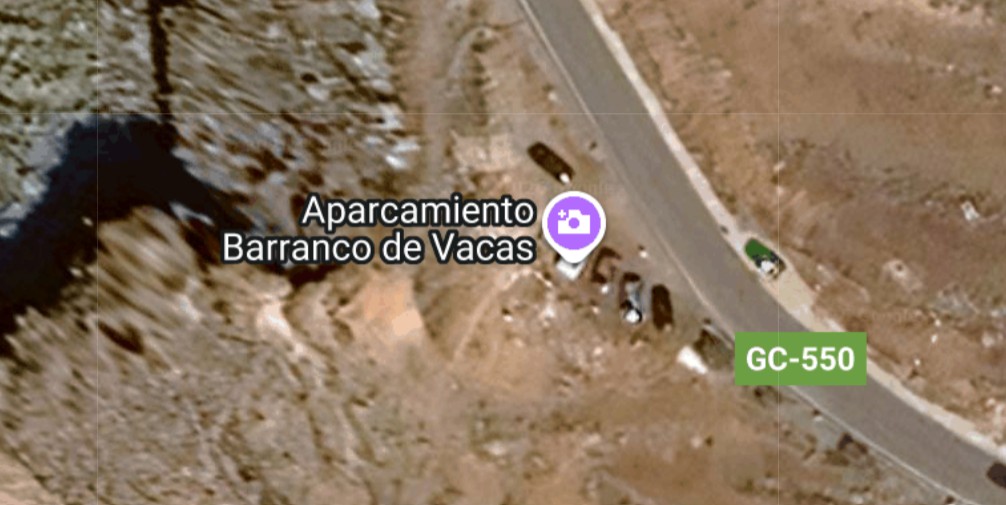
The practical rule is simple: do not park on bends, do not leave part of the car in the traffic lane and never block an access. If there is no safe space, continue and look for another option. This is a short visit and is not worth creating a dangerous roadside situation.
What is the walk like and how long does the visit take?
From the bridge area, a dirt path descends into the ravine and continues towards the narrow section. This is not a developed attraction with boardwalks or step-free access. Expect gravel, stones and small changes in level.
Allow roughly 30 minutes to one hour to see the formations, walk carefully and take photographs. The total visit can take longer if you have to park farther away or arrive during a busy period. With children, consider their confidence on uneven ground and supervise them closely near the road.
What are the coloured rock walls?
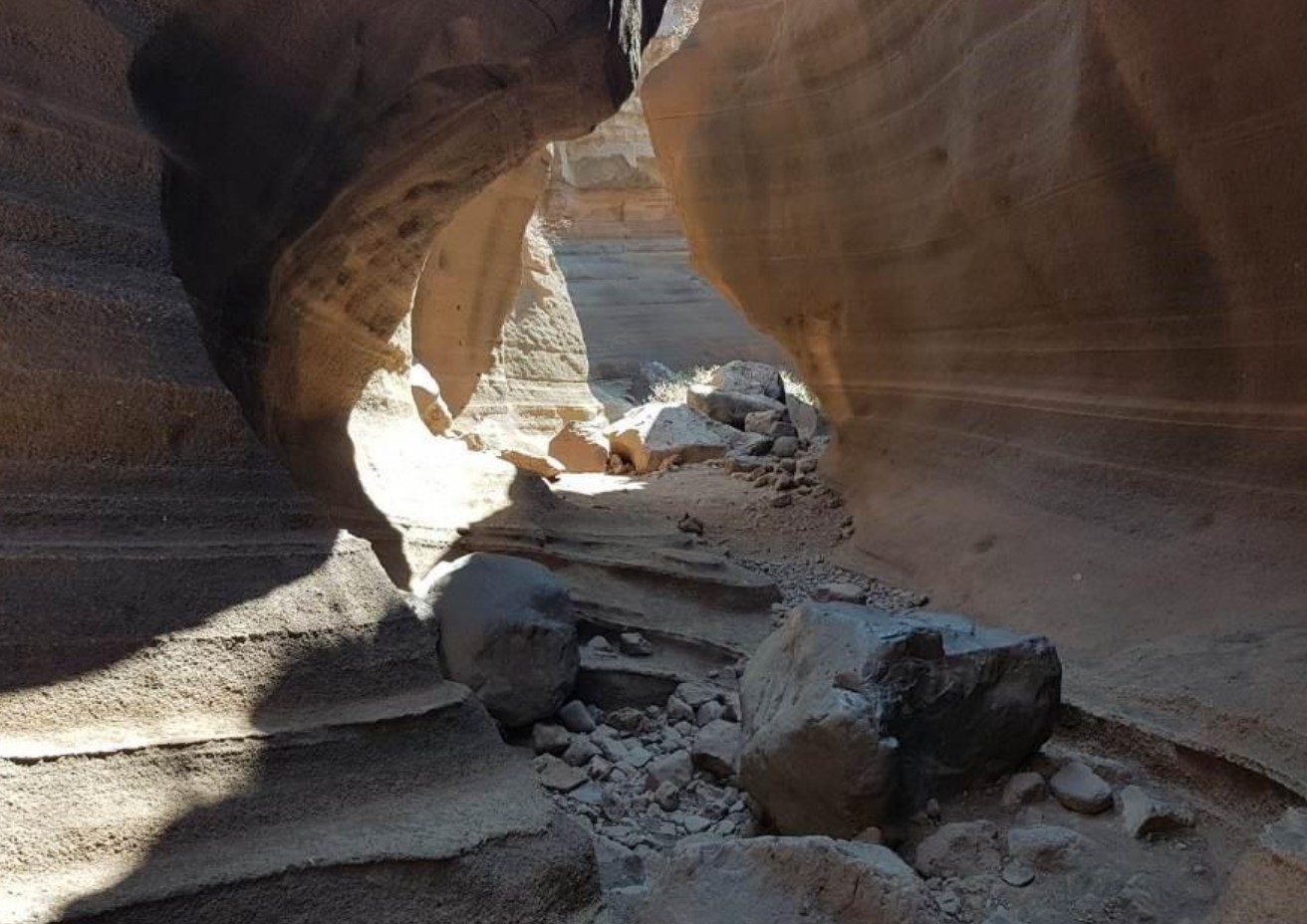
The attraction is formed by volcanic tuff shaped by water erosion. Over time, runoff has carved curved grooves and smooth-looking walls that change noticeably with the direction of the light. IGME includes the site in Spain’s inventory of geological places of interest because of its geomorphological value.
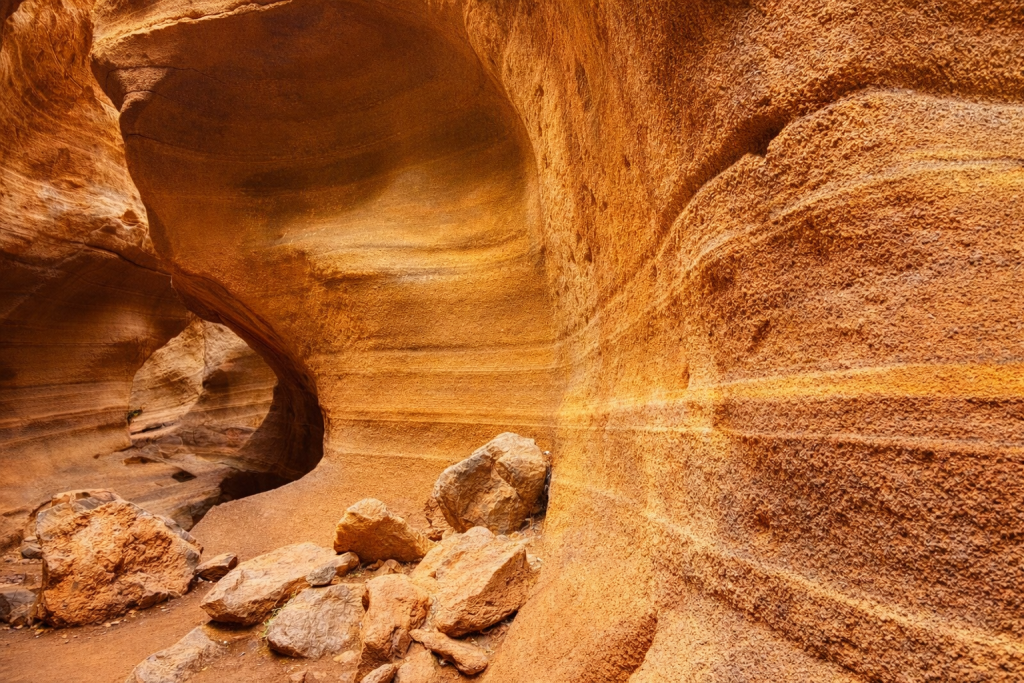
The site is small and fragile. Do not climb the walls, remove material or repeatedly lean against the rock for photos. Visiting responsibly matters more here than trying to recreate a particular social-media shot.
What is the best time to visit?
For fewer people, try a weekday and arrive early; for stronger light inside the narrow walls, the middle part of the day can work better. There is no single perfect hour throughout the year because the sun angle, cloud cover and season all affect the light.
If the access area is congested, change the order of your day and visit Agüimes or Guayadeque first. That is usually better than waiting beside a busy road for a short photo stop.
Safety: when should you not enter?
Do not enter the ravine during heavy rain, flood warnings or unstable weather. A dry channel can receive water from higher ground even when it is not raining exactly where you are standing. If the forecast is unsettled, check official weather and emergency information before travelling.
If you are visiting in the cooler months, our Gran Canaria in winter guide explains how conditions can differ between the coast, mid-altitude areas and mountains.
What to see nearby: Agüimes and Guayadeque
Barranco de las Vacas works best as part of a southeast Gran Canaria day rather than as the only destination. A logical route is Barranco de las Vacas → historic Agüimes → Barranco de Guayadeque.
Agüimes adds traditional architecture, plazas and a more local atmosphere, while Guayadeque combines scenery, archaeology and well-known cave restaurants. For completely different landscapes on other days, see our Roque Nublo guide and Maspalomas Dunes guide.
Responsible visiting tips
- Do not scratch, remove or climb on the tuff walls.
- Take all rubbish away with you.
- Give other visitors space in the narrow section.
- Do not force an unsafe parking space beside the GC-550.
- Stay out of the channel when heavy rain or flooding is possible.
With a little planning, Barranco de las Vacas is a short but memorable stop: distinctive geology, excellent photography and a landscape that is best enjoyed without rushing and left exactly as you found it.
Frequently asked questions
Can you visit Barranco de las Vacas with children?
It can work for children who are comfortable on uneven ground, provided they are closely supervised. The main issues are gravel, small drops and the roadside access rather than the walking distance.
Is Barranco de las Vacas accessible for people with reduced mobility?
No. The current route uses a dirt path and the ravine bed, with uneven surfaces and changes in level. There are no accessible boardwalks or step-free facilities.
Do you need half a day for Barranco de las Vacas?
No. The site itself is a short visit. It makes more sense to combine it with Agüimes and Guayadeque to make the most of the journey to southeast Gran Canaria.