
Where to stay in Gran Canaria depends mainly on your priorities: beach weather, city life, peace and quiet, nightlife or an easy base for exploring the island. For a first trip focused on sunshine and the coast, Maspalomas, Meloneras, Puerto Rico, Amadores and Puerto de Mogán are all practical choices. If you prefer culture, food and a major urban beach, Las Palmas de Gran Canaria offers a very different experience.
Gran Canaria has striking microclimates and landscapes within relatively short distances. Choosing the right base can save a lot of driving time, especially if you want to combine the south, the capital and the mountains.
Which area suits your type of trip?
| Area | Best for | Main advantage | Keep in mind |
|---|---|---|---|
| Maspalomas / Meloneras | First visits, couples, families | Beach, promenades and a good base for day trips | Clearly resort-oriented |
| Playa del Inglés | Services and nightlife | Everything close by | Busier and less peaceful |
| Puerto Rico / Amadores | Sun and relaxation | Convenient southwest location and beaches | Less urban atmosphere |
| Puerto de Mogán | Couples and slower trips | Compact marina setting | Less central for exploring the whole island |
| Las Palmas de Gran Canaria | City, food and beach | Las Canteras and local life | Different weather pattern from the south |
| Tejeda / inland | Nature and switching off | Mountain scenery | More driving and less beach time |
Maspalomas and Meloneras: the best all-round option
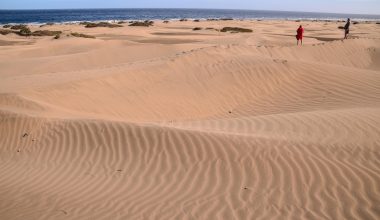
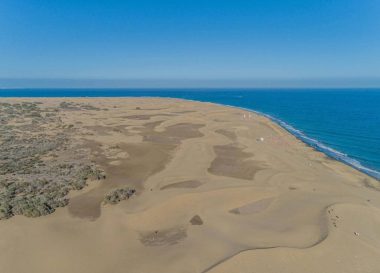
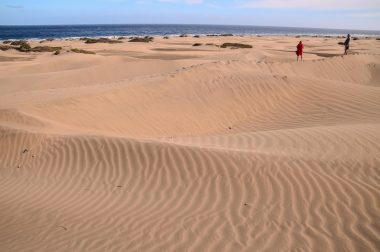
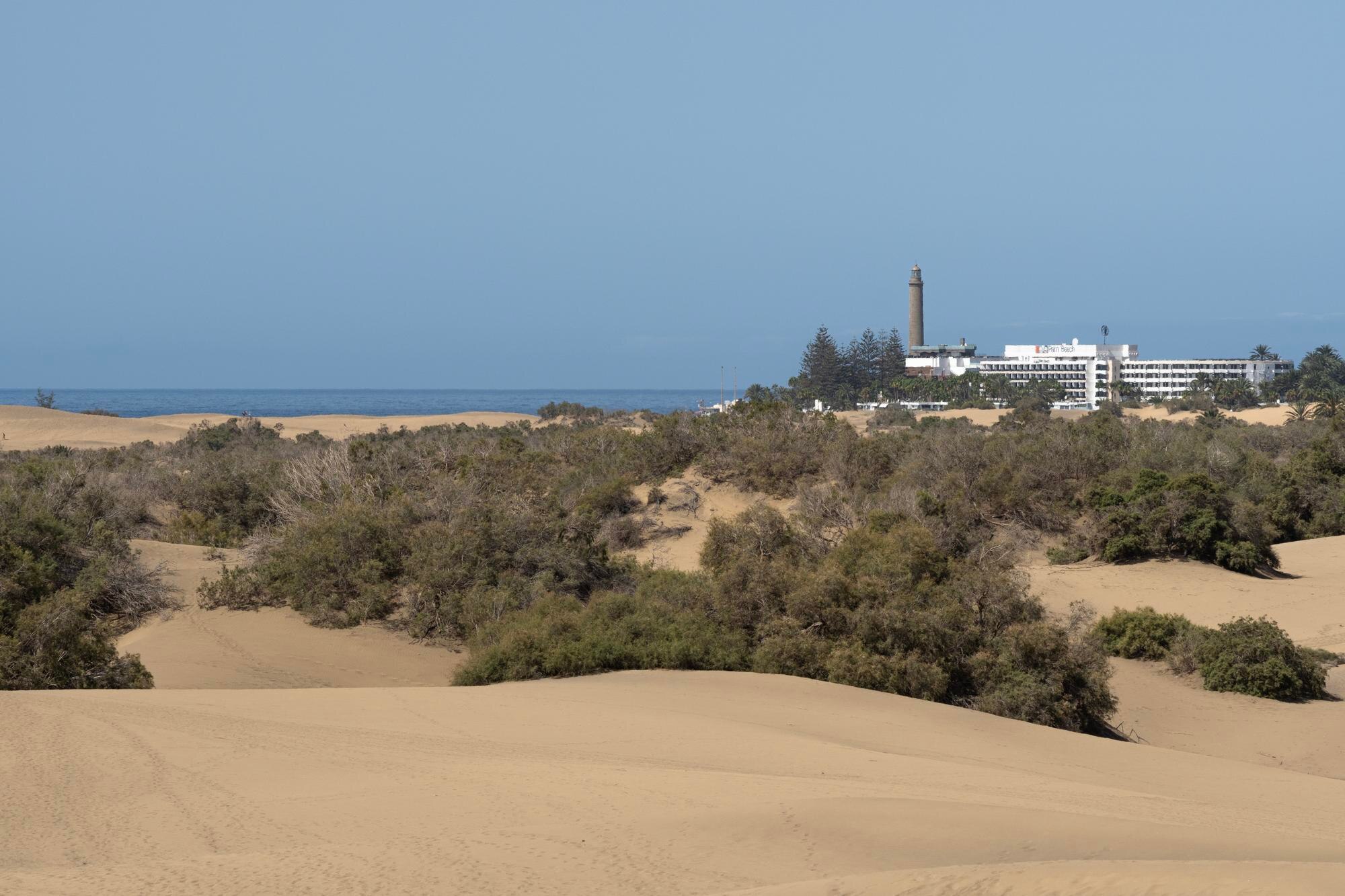
Maspalomas is one of the easiest bases for a first visit to Gran Canaria. It combines beaches, promenades, services and convenient road access to other parts of the island. The Maspalomas Dunes are right within the resort area, so you do not need a car to enjoy one of Gran Canaria’s best-known landscapes.
Meloneras has a slightly calmer, more polished feel, with a seafront promenade, restaurants and hotels geared towards relaxation. It works especially well for couples and travellers who expect to spend plenty of time near their accommodation.
Do you need a car? Not for a south-coast holiday. It becomes more useful if you want several day trips into the mountains, north or southeast.
Playa del Inglés: convenient for services and nightlife
Playa del Inglés works well if you want restaurants, shops, entertainment and the beach within easy reach. It is livelier than Meloneras and suits travellers who do not want to rely on a car every day.
You can also reach the Maspalomas Dunes area from here. The main drawback is the same thing that attracts many visitors: it is busy. If quiet evenings and a smaller setting matter more, Puerto de Mogán or Meloneras may suit you better.
Puerto Rico and Amadores: for sunshine and beach time
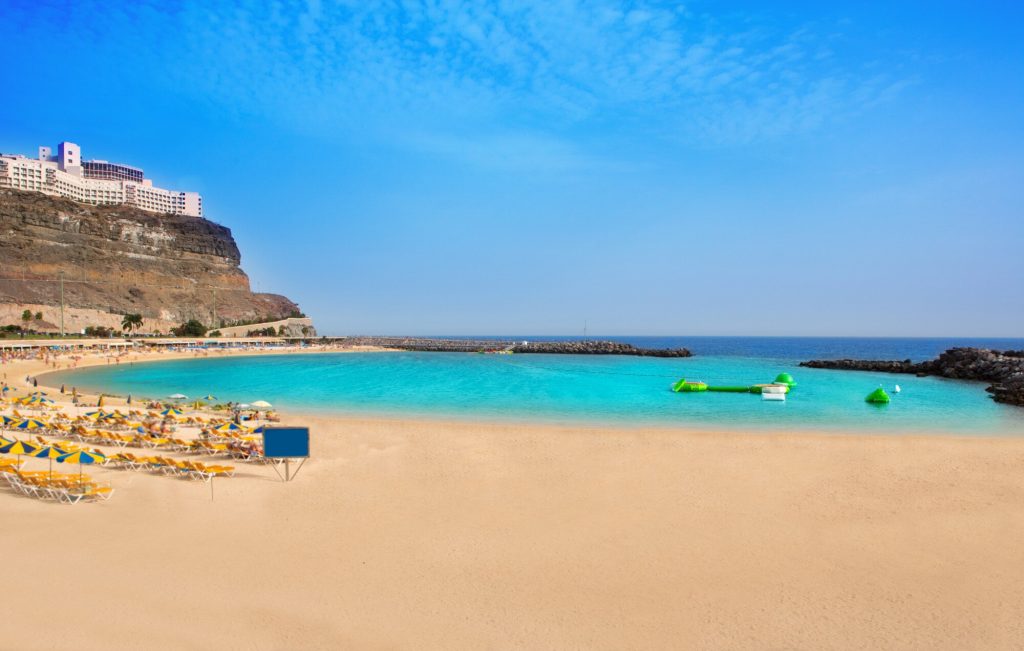
Puerto Rico and Amadores are strong choices if your main aim is to relax by the sea. Puerto Rico concentrates accommodation, restaurants, a beach and services in a compact area, while Amadores is slightly more focused on quiet beach time.
The southwest is particularly popular in the cooler months. If you are travelling between December and February, our Gran Canaria in winter guide explains the differences between the coast, north and mountains.
Do you need a car? Not for a beach-focused break. It is useful if you want several inland or northern day trips without relying on timetables.
Puerto de Mogán: small, relaxed and easy to explore
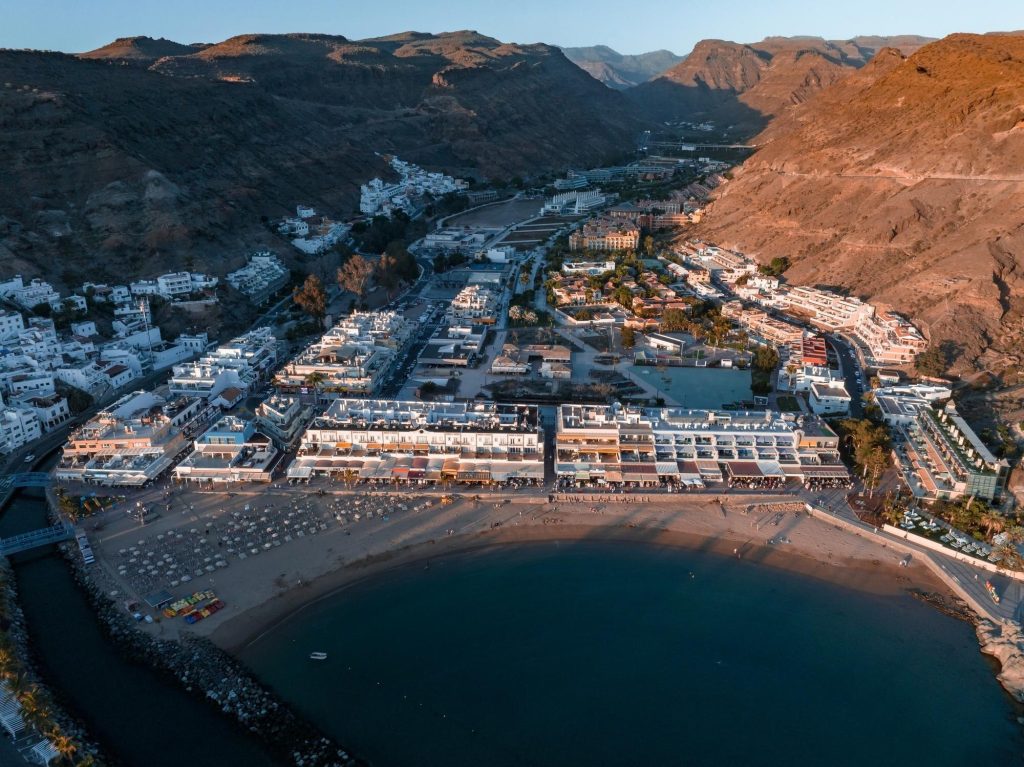
Puerto de Mogán is a good base for couples and travellers who prefer a compact, slower-paced setting. You can walk between the beach, marina, restaurants and promenade without major transfers.
Its main disadvantage is location: it is less convenient if you plan to cross the island every day. For a trip centred on the southwest it works very well; for an intensive touring itinerary, Maspalomas may be more practical. See our detailed Puerto de Mogán guide.
Las Palmas de Gran Canaria: city life, culture and Las Canteras

Las Palmas de Gran Canaria is the best choice if you want to mix an urban beach with food, museums, historic neighbourhoods and local city life. The Las Canteras area is particularly convenient because many plans can be done on foot or by public transport.
It does not have the same resort atmosphere or weather pattern as the south, but it offers much more urban variety. If you do not want a hire car every day, it is a very practical base. Our guide to getting around Gran Canaria remains useful once that article is published in English.
Tejeda and inland Gran Canaria: for nature, not daily beach trips
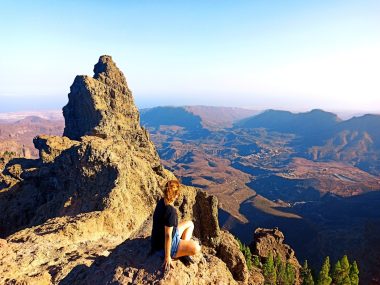
Staying in Tejeda or the highlands makes sense if the mountains are central to your trip. You get scenery, walking routes and quieter evenings, but it is not the best base if you want the beach every day or easy nightlife.
For a first visit, one or two inland nights often work better than making it your only base. If you plan to include Roque Nublo, check the current reservation and access rules in advance.
One base or two?
For 3–5 days, one base is usually enough; for a week, splitting your stay between the south and Las Palmas can reduce driving. There is little value in changing hotels repeatedly because each move takes time away from the trip.
If you are arriving by plane and still deciding how to reach your accommodation, our Gran Canaria Airport transfer guide summarises the main connections once its English version is published.
Frequently asked questions
What is the best area for a first visit?
Maspalomas and the south are usually the easiest choice for beaches, services and day trips. Las Palmas can be better if city life and culture matter more.
Where can you stay without a car?
Las Palmas de Gran Canaria, Playa del Inglés, Maspalomas and Puerto de Mogán all work well because they concentrate services and transport. A car is much more useful for mountain and rural areas.
Where is best to stay in winter?
The south and southwest are especially popular with travellers prioritising sunshine and beach time, although no area can guarantee good weather every day.