
Gran Canaria is worth discovering through food as well as landscapes. Local cooking brings together simple ingredients, fish, cheese, mountain dishes, almond-based sweets and drinks with deep roots on the island. You do not need to chase one famous restaurant to start: many of these flavours appear in local eateries, markets and family-run places across the island.
This guide answers a straightforward question: what to eat in Gran Canaria if you want to understand the local cuisine without turning your holiday into a rigid food itinerary. These ten dishes and products give you a useful starting point.
10 local foods and products to try in Gran Canaria
| Food or product | What it is | When to try it |
|---|---|---|
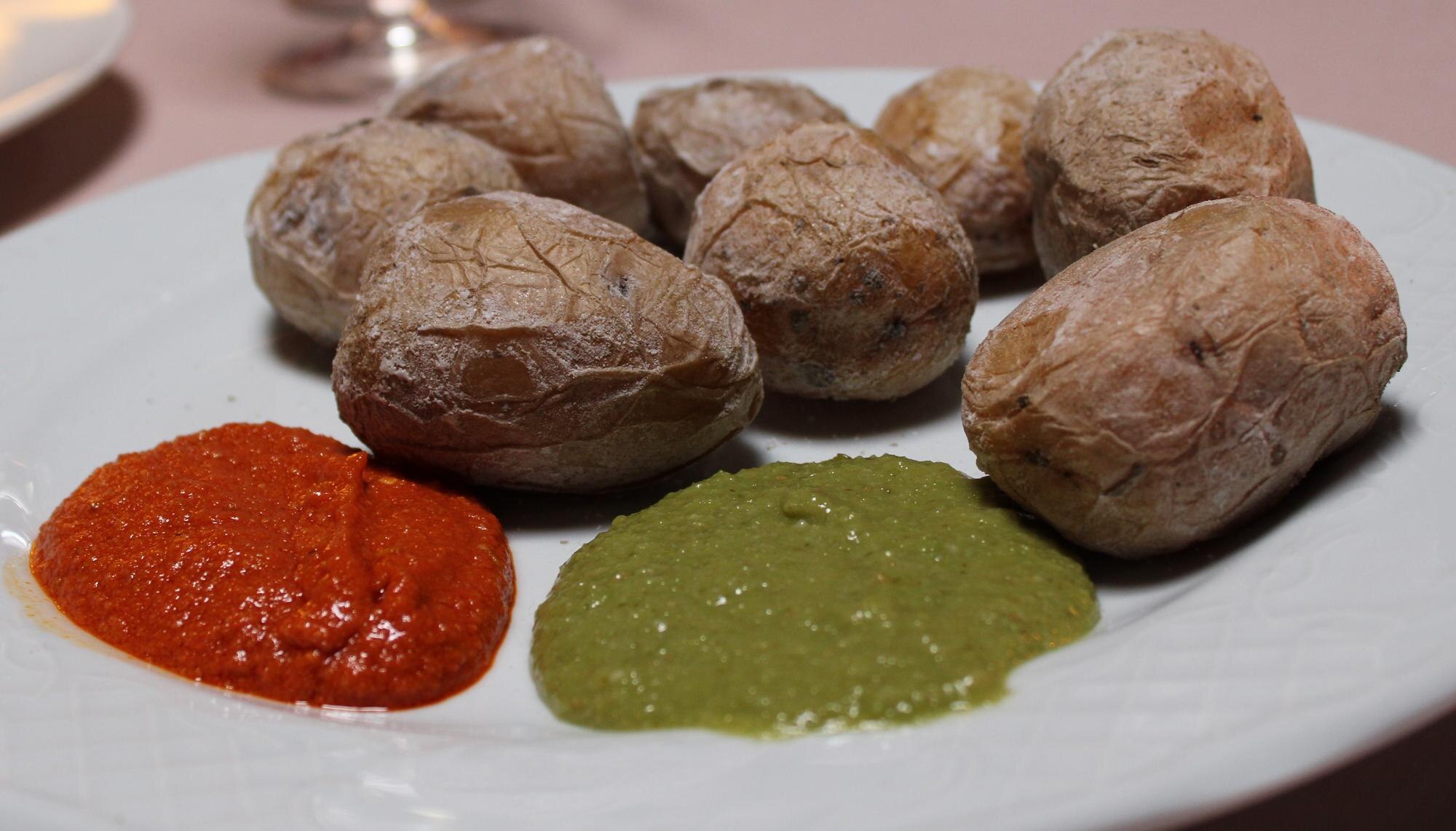
| Papas arrugadas with mojo | Salted wrinkled potatoes with Canary Island sauces | Starter or side |
| Gofio | Roasted milled cereal | Escaldón, doughs or desserts |
| Gran Canaria cheese | Goat, sheep, cow and mixed-milk cheeses | Starter, sharing board or tasting |
| Local fish | Fresh fish depending on season and catch | Lunch by the sea |
| Sancocho canario | Salted fish with potatoes and mojo | Traditional main meal |
| Watercress stew | Hearty stew based on watercress | Cooler days or inland meals |
| Canarian ropa vieja | Chickpea and meat stew | Filling main dish |
| Bienmesabe and almond sweets | Almond-based desserts | Dessert or afternoon treat |
| Agaete coffee | Coffee grown in the Agaete Valley | Breakfast or after lunch |
| Canarian rum | Spirit with a long local tradition | Tasting or after dinner |
1. Papas arrugadas with mojo
This is probably the most recognisable combination in Canarian food: small potatoes cooked with salt and served with mojo. The sauces vary from place to place; red and green versions are the best known, but there is no single universal recipe.
It is worth thinking of papas arrugadas as more than a side dish. They often arrive as a starter or shared plate and are a simple, everyday expression of local cooking rather than something invented for visitors.
If you are staying for several days, try them in more than one place. Texture, saltiness and the mojo can vary enough to make comparison part of the experience.
2. Gofio: one of the oldest Canarian flavours
Gofio is made from roasted milled cereals and appears in many different forms. It can be served as escaldón, mixed into doughs, stirred into stock or used in desserts.
For first-time visitors, the toasted flavour can be unexpected: dry, nutty and quite distinctive. You do not need to try every preparation. A small portion of escaldón or a dessert made with gofio is enough to understand why it remains such an important part of Canary Island food culture.
It is also a good example of traditional food that exists independently of tourism and continues to appear on very different menus.
3. Gran Canaria cheese and Queso de Flor de Guía
Gran Canaria produces a wide range of cheeses from goat, sheep, cow and mixed milk. One of the island’s best-known specialities is Queso de Flor de Guía, associated with the north-west and traditionally made using vegetable rennet from cardoon flowers.
Not every cheese on the island is Queso de Flor de Guía, and styles vary greatly by milk, ageing and producer. The best approach is to taste a few different types rather than look for one “correct” cheese.
If you want a guided introduction, Gran Canaria Plan lists an artisan cheese and Gran Canaria wine tasting by Las Canteras. The current experience includes cheeses from several Canary Islands paired with local wine, so it works best as a broad tasting rather than a producer-specific visit.
4. Local fish: a good reason to eat near the coast
Fish appears naturally on menus across an island, but what is available depends on the restaurant, season and daily supply. It is usually more useful to ask what is fresh than to arrive determined to order one specific species.
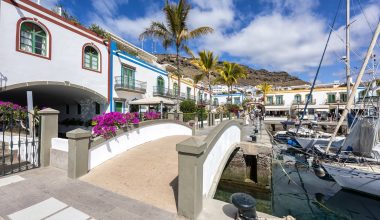
Puerto de las Nieves, Puerto de Mogán and other coastal areas are easy places to include a fish lunch within a day of sightseeing. You do not need a famous restaurant: clear sourcing, simple preparation and a pleasant setting are often better guides.
If you want to combine food with traditional places, our guide to the best towns and villages in Gran Canaria includes both Agaete and Puerto de Mogán.
5. Sancocho canario
Sancocho canario is a traditional dish built around salted fish and potatoes, usually served with accompaniments such as mojo. It has more character than a simple grilled fish and reflects a style of cooking shaped by preservation and basic local ingredients.
You will not necessarily find it on every menu every day. If it appears in a traditional restaurant and you want something more substantial, it can be a very good main dish or something to share.
Part of its appeal is that it feels like food with a life beyond tourism: a useful way to experience fish in a distinctly Canarian style.
6. Watercress stew
Watercress stew is a reminder that Gran Canaria is not only about beaches and warm coastal weather. In mid-altitude and inland areas, spoon dishes and stews remain part of a more homely style of cooking.
Recipes vary, but watercress is the defining ingredient. It suits cooler days particularly well and makes sense after a mountain outing or when you want something more comforting than beach-side food.
If your holiday combines coast and highlands, our guide to the best time to visit Gran Canaria explains how much conditions can differ across the island.
7. Canarian ropa vieja
Canarian ropa vieja is a hearty dish based around chickpeas and meat. It has roots in using leftovers efficiently but has long since become a dish in its own right.
You may see it served as a main course or as something to share. There is no need to look for one definitive recipe: as with many traditional stews, ingredients and proportions vary from kitchen to kitchen.
It is a good choice if you want a filling, home-style dish during an inland day rather than another light meal by the sea.
8. Bienmesabe and almond sweets
Bienmesabe is a sweet almond preparation that appears in different dessert forms. Almonds are also strongly associated with mountain areas such as Tejeda, where local bakeries add a food element to what many travellers otherwise treat purely as a scenic stop.
If you are visiting Tejeda, try a small portion of local almond pastry or share a dessert rather than simply passing through for the views. It is an easy way to connect the landscape with local food traditions.
Tejeda also features in our guide to the prettiest towns and villages in Gran Canaria.
9. Agaete coffee
The Agaete Valley has a small coffee-growing tradition that has become one of the north-west’s most distinctive food products. It is not mass-produced, which is part of the reason it is more interesting as a local product than as a generic souvenir.
If you visit Agaete, ask specifically for locally grown coffee in places that can explain where it comes from. You can also combine it with other valley products and make an after-lunch coffee part of the visit itself.
Do not assume every coffee served in Agaete is locally grown. If origin matters to you, ask.
10. Canarian rum and Arehucas
Rum is part of the Canary Islands’ agricultural and industrial history, and in Gran Canaria one name is especially familiar: Arehucas in Arucas. You can drink rum in many places, but visiting the distillery gives more context to the process and the local tradition.
Gran Canaria Plan offers a guided Arehucas distillery visit with rum tasting. It is a separate activity from exploring Arucas itself, so allow dedicated time if you want to combine the two.
If you do not drink alcohol, Arucas is still worth visiting for its architecture and historic centre; the rum experience is optional, not the reason everyone has to go.
How to try local food during your holiday
You do not need to build your entire itinerary around food. A simple approach works better: eat fish on the coast, try mountain products inland, and use towns or markets as opportunities to discover cheese, pastries and local ingredients.
In Las Palmas, a city day can easily include food around Vegueta, Triana or Las Canteras. Our Las Palmas one-day guide helps structure the visit without turning into a restaurant guide.
If you are planning costs, remember that eating out can vary enormously by venue. Our Gran Canaria holiday cost guide separates accommodation, food, transport and activities.
What to look for on a menu if you want to eat more locally
- Recognisable local products: cheese, catch of the day, stews, gofio or papas with mojo.
- Do not obsess over the word “traditional”: a restaurant can cook local ingredients well without turning every dish into a tourist performance.
- Ask questions: if you do not know which fish, cheese or wine is being served, ask where it is from and how it is prepared.
- Share a few starters: it is often the easiest way to try more flavours without ordering a long set menu.
Frequently asked questions about what to eat in Gran Canaria
What is the most typical food in Gran Canaria?
There is no single dish. Papas arrugadas with mojo, gofio, cheese, fish, sancocho and traditional stews are all part of the local food culture you will come across on the island.
Which foods are especially associated with Gran Canaria?
Queso de Flor de Guía is closely linked to the island’s north-west. Agaete coffee and the rum tradition around Arucas are also particularly distinctive.
Where can I try local food in Gran Canaria?
Across local restaurants, markets, cafés and towns throughout the island. Coastal, northern and inland areas all offer different contexts, so it is worth trying more than one part of Gran Canaria.
Do I need to book food experiences in advance?
Not for an ordinary meal in every case. For organised tastings or guided visits, check current availability and conditions before travelling specifically for the experience.